
The Warren Public Library traces its origins to 1830, when Thomas Struthers, Lansing Wetmore, Glenni Scofield, and Abner Hazeltine first met to discuss establishing a library in Warren. A constitution for the Warren Library Association followed in 1831, but it was Scofield’s 1871 donation of his personal book collection—intended “to be made accessible to the public”—that reignited the effort. The first organized library opened in 1872 at the YMCA, and by October 16, 1873, the Association had formally adopted its constitution, a date now recognized as the Library’s official founding. The Library was incorporated later that year.
Philanthropist Thomas Struthers offered land and a building in 1882, leading to construction of the Struthers Library building and theatre, completed in 1884. Rental income from tenants—including the post office and local newspaper—was expected to sustain library operations. By 1895, the Library ended its paid “ticket system,” embracing the ideal of an “absolutely free library” for all citizens. The late 19th century also brought the Library’s first card catalog and the adoption of the Dewey Decimal System.
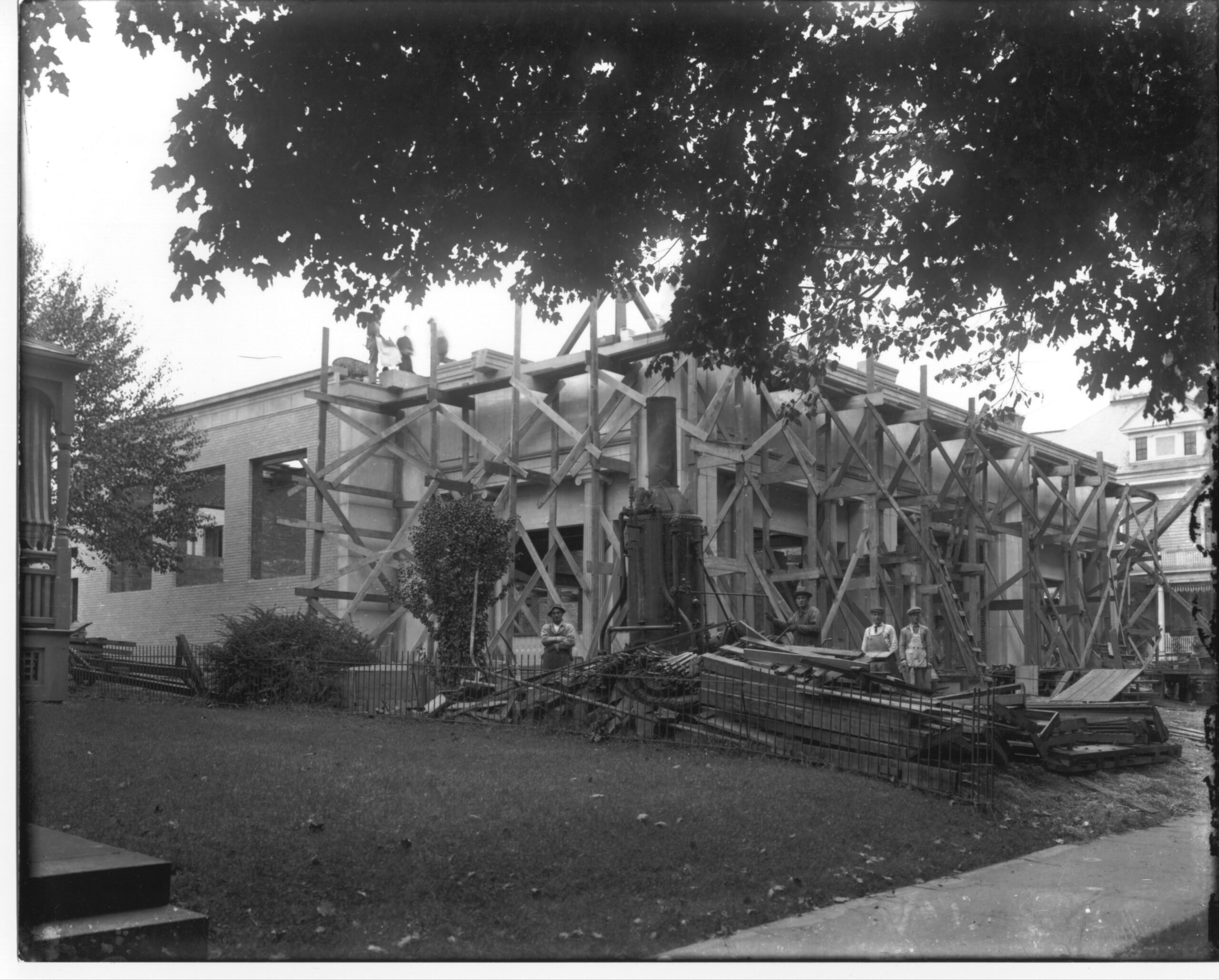
The early 20th century saw major expansions in service: the first Children’s Room opened in 1902, public access to the stacks began in 1908, and by 1916, the Library moved into its current Market Street building, designed by Warren & Wetmore of New York. The Library supported national efforts during both World Wars, distributed public‑health information during the 1918 flu pandemic, and served as a vital community refuge during the Great Depression.
Modernization accelerated after mid‑century. The Bookmobile launched in 1960, Warren became the Seneca District Center in 1962, and multiple renovations (1965, 1984–85, 2002, and 2022–23) expanded space for children, reference services, technology, and teen users. The Library transitioned from a physical card catalog to computerized checkout in 1990, introduced public internet access in 1997, and later added high‑speed connections, Wi‑Fi, and eBooks.
Despite recurring funding crises in 1992, 1998, 2003, and 2009–10, the Library continued to adapt—launching a county‑wide library card, expanding digital services, and maintaining community access even through the COVID‑19 shutdown of 2020, when staff worked remotely to keep resources available.
Recent years have focused on access and equity. The Library celebrated its 150th anniversary in 2023, eliminated overdue fines in 2024 to reduce barriers to use, expanded weekday hours in 2025, and completed exterior preservation work funded by community support.
Today, the Warren Public Library stands as a testament to nearly two centuries of community commitment, resilience, and belief in the power of free public knowledge.
May 2025. As you may know, Thomas Struthers was instrumental in ensuring that this library was established in 1873 and then given the opportunity to grow and eventually become the thriving institution that it is today.
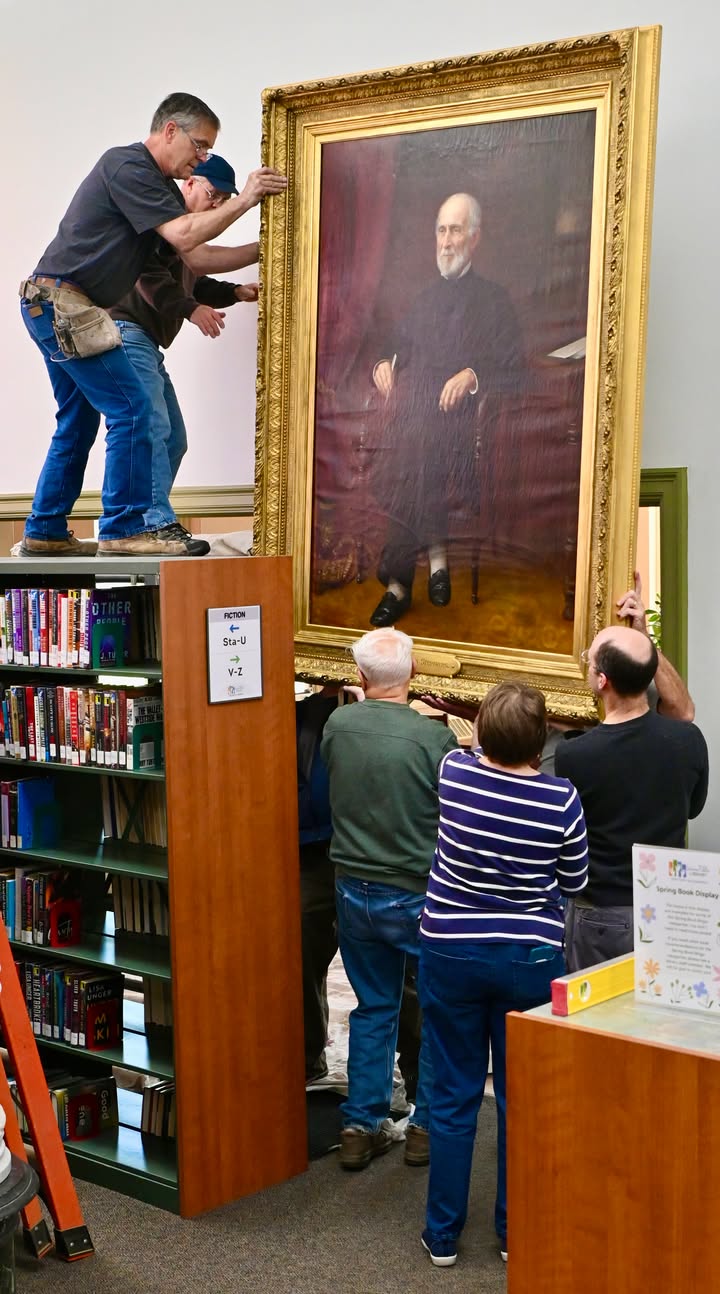
Prior to our renovation, it became clear that we were going to need to relocate our large portrait of Thomas Struthers, which was painted by William A. Greaves in 1884. When the painting was taken down for safe storage, we discovered that it had no back protecting the canvas. It was suggested that we have the artwork restored and repaired before it was rehung.
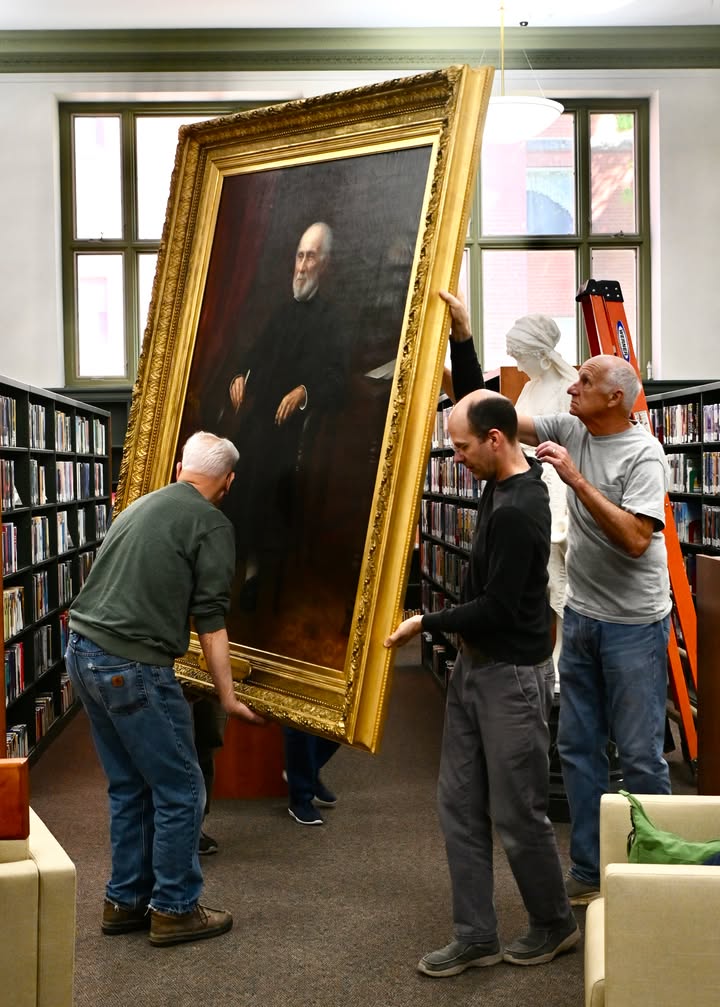
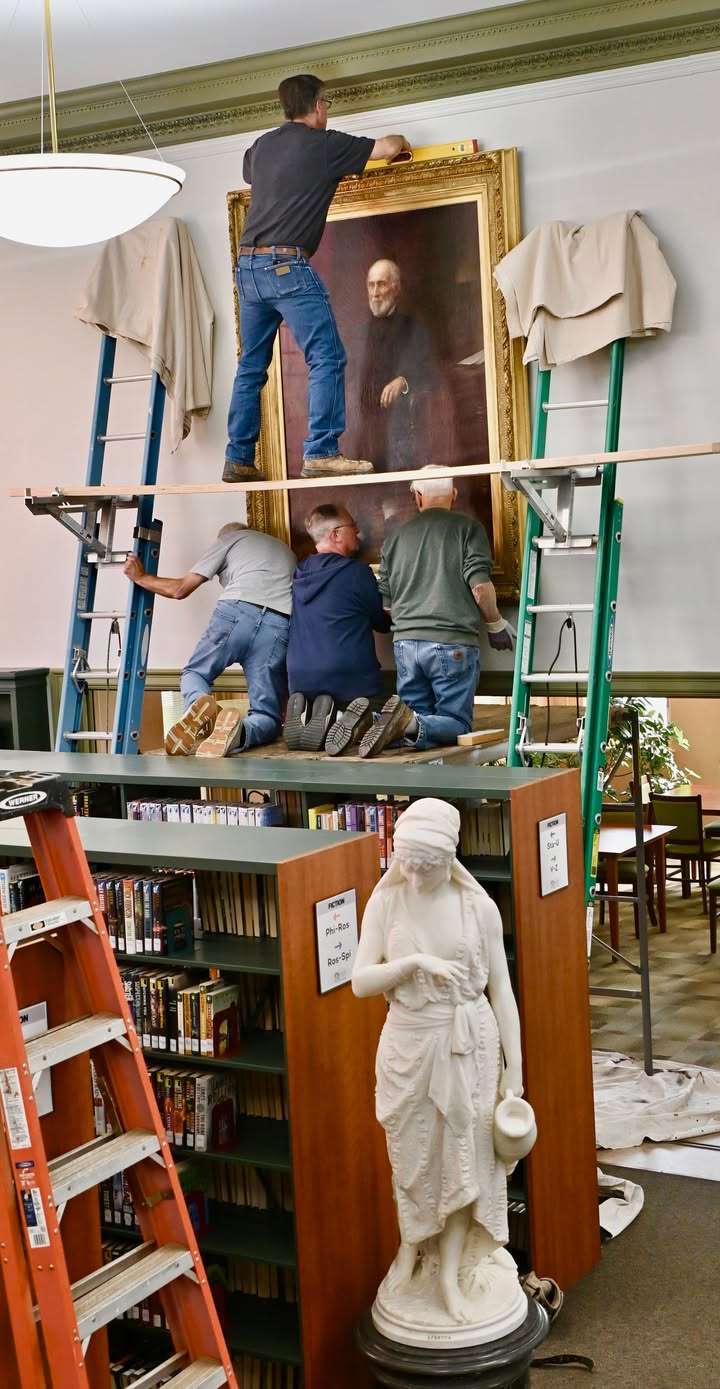
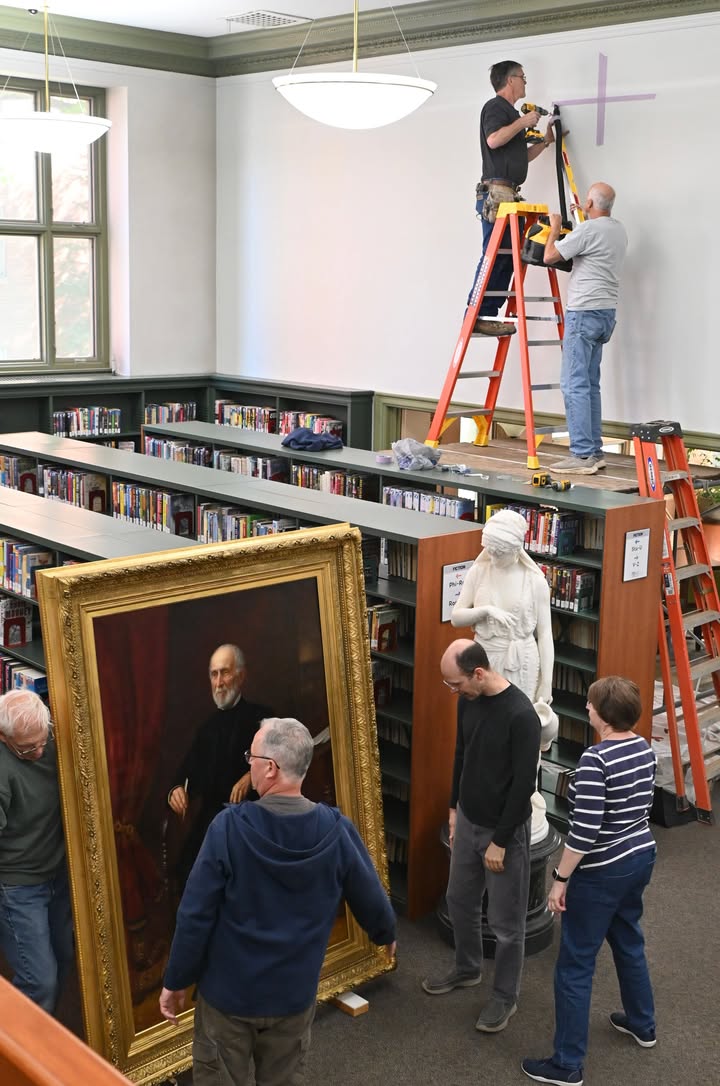
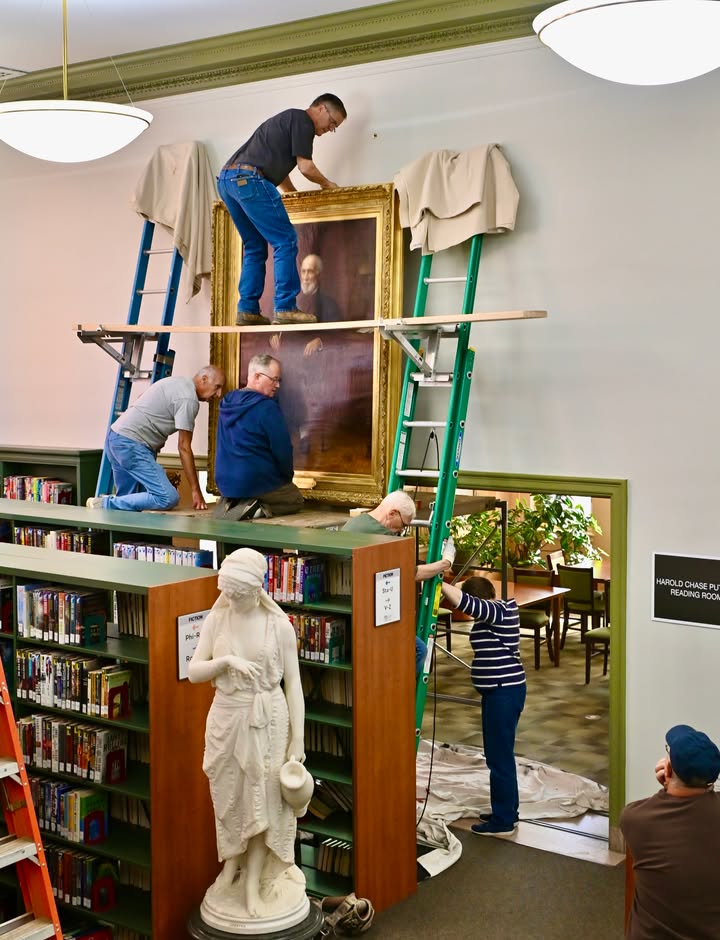
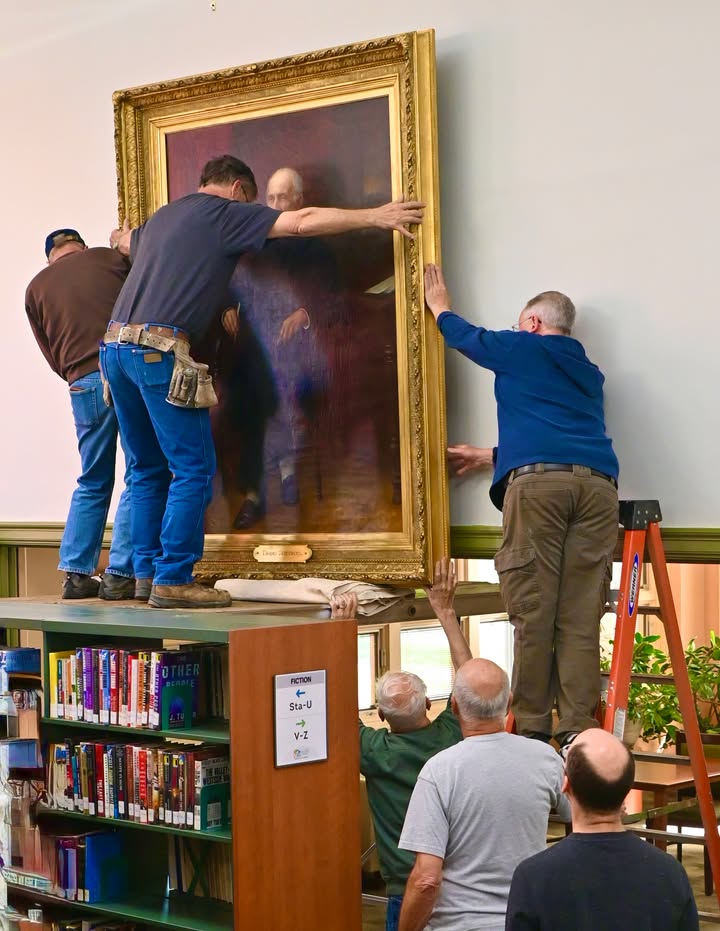
Gabriel Dunn, owner of unDunn Art Services, brilliantly restored our portrait of Thomas Struthers. In early May, Mr. Struthers was installed in a place of prominence on the first floor above the Harold Chase Putnam Reading Room on the first floor. This was done with the help and expertise of James Pearson, of the Erie Art Museum, and volunteers from the First Lutheran Church property committee.
We’d love to extend our gratitude to Kevin Ignatius, the Putnam family, and Susan Stout and the Board of the Thomas Struthers Trust, doing business as the Struthers Library Theatre, for their generous donations to fund the restoration. We also would like to extend our gratitude to James Pearson, Denise Pearson, Kevin Downey, Dave Campbell, Tim Bleech, Mike Wachter, and Bob Gregerson for their hard work in hanging the portrait. A heartfelt thank you to Gary Lester for photographing the installation process.
Be sure to stop and check out the portrait the next time you’re in the library. You can’t miss it!